The Commanders were aggressive last offseason, looking to build on their breakout 2024 campaign. Instead, everything went sideways. Washington won just five games, picked inside the top 10, and now enters 2026 at a crossroads. The Commanders retained head coach Dan Quinn, but both coordinators are gone in favor of new voices. Quinn is a defensive-minded coach, but he’s made it clear that he wants to operate as a CEO-style head coach rather than call plays himself. He’ll still have a major influence on the defense, but the success of this coaching staff will largely depend on the coordinators. If Washington struggles again or the new play callers fail to deliver, Quinn could find himself on the hot seat.
Daronte Jones takes over as defensive coordinator after spending years working under some of the biggest names in defensive football, including Vance Joseph, Marvin Lewis, Mike Zimmer, Lou Anarumo, and most recently Brian Flores. Despite that experience, this will be his first opportunity as a full-time NFL play caller. Flores has established himself as one of the league’s best defensive coordinators despite an up-and-down head coaching career, and Minnesota had long prepared for the possibility of losing him by grooming Jones for this role. The expectation is that Jones will run a version of Flores’ aggressive 3-4 defense, though he’ll likely put his own spin on it. The Vikings fielded one of the most unique defensive schemes in the NFL over the last few years. It’s impossible to know exactly how much of that came from Jones, but his background makes him an intriguing, if still unproven, hire.
On offense, the Commanders promoted David Blough to offensive coordinator. The former backup quarterback was known more for his leadership and presence in the quarterback room than anything he did on the field. He always felt like a player-coach type of backup, so his transition into coaching made plenty of sense. He’s quickly climbed the coaching ladder and now lands one of the more surprising coordinator promotions in the league. While he’s learned under Kliff Kingsbury and the Air Raid system, I expect Blough to incorporate more traditional and Shanahan-style concepts rather than simply running Kingsbury’s offense. He’s one of the biggest wild cards among first-year coordinators, but he’s someone I believe in.
Larry Izzo returns for his third season as special teams coordinator after joining the Commanders from Seattle. He put together a solid special teams unit last season, and with all of his specialists returning, there’s every reason to expect similar production in 2026.
Adam Peters has been Washington’s general manager since 2024. His early draft classes and free agent additions helped fuel the team’s breakout season, but many of his moves in 2025 felt short-sighted, and that approach ultimately backfired. This offseason has been much different, with Peters focusing on smaller, more calculated additions as he looks to put the Commanders back into playoff contention.
Quarterbacks (12th)

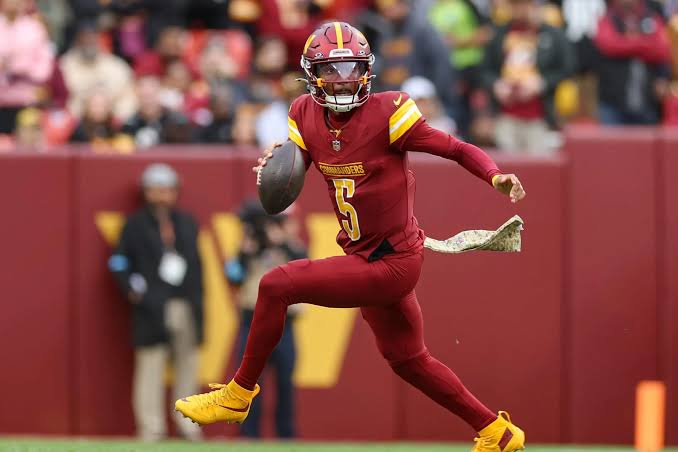
Jayden Daniels was a rookie sensation in 2024 and the driving force behind the Commanders’ remarkable climb up the standings. Entering the draft, he was viewed as a high-risk quarterback prospect, but he immediately displayed the poise, composure, and processing ability that rookie quarterbacks rarely possess. His 2025 season was much different. Daniels dealt with a sophomore slump before missing the second half of the year with an injury. His aggressive running style will probably always raise durability concerns, but he enters this season healthy. He also went just 2-5 as a starter last year, creating some questions that go beyond his health. The hope in Washington is that the 2024 version of Jayden Daniels returns, but that’s far from guaranteed.
Marcus Mariota remains one of the better backup quarterbacks in the league and is a strong stylistic fit behind Daniels. He’s received some buzz as a potential starter over the last few years, but I still view him strictly as a quality backup. In a similar number of snaps last season, Mariota produced passing numbers comparable to Daniels, though he was much more turnover-prone. If Daniels misses a game or two, Mariota is capable of keeping the offense afloat. If Daniels misses significant time again, however, Washington is probably headed toward another top draft pick.
Athan Kaliakmanis is a seventh-round rookie with a strong arm and solid mechanics who profiles as a developmental backup. The biggest concern is his lack of mobility. He’s essentially a statue in the pocket, making him a dramatic stylistic change from both Daniels and Mariota. If he were ever forced into action, Washington would almost need a separate version of its offense built around him.
Sam Hartman rounds out the quarterback room. I expected the 2024 undrafted free agent to hear his name called during the draft, but at this point he’s been little more than a camp body. It’s hard to see him climbing past any of the three quarterbacks ahead of him on the depth chart.
Running Backs (27th)

The Commanders have one of the deeper running back rooms in the league, but they still lack a true workhorse RB1. Jacory Croskey-Merritt generated a ton of hype as a seventh-round pick last season, but he didn’t quite live up to those expectations in his first year as the lead back. Ball security issues and inconsistent vision kept him off the field more than fantasy owners would’ve liked, but the athletic tools are there for him to eventually develop into a top-tier running back.
Rachaad White is the ideal backup. He’s one of the best pass-blocking running backs in the league and is an extremely polished third-down option. He can handle power situations if needed, but that’s also where sixth-round rookie Kaytron Allen could carve out a role. Allen is a high-floor, NFL-ready power back, though he doesn’t offer a ton of upside. He complements Croskey-Merritt well, but he’ll likely begin his career behind White unless he develops as a blocker himself.
Jeremy McNichols is a very solid, if unspectacular, runner. He’s spent most of his career as an efficient RB3, and it’s always been a little surprising that he hasn’t been given more opportunities. As the fourth running back on this roster, though, he’s exactly the type of depth piece you want. Jerome Ford is another experienced backup, even if he’s been asked to handle larger workloads in Cleveland. His biggest weakness has always been his vision, and with four capable backs ahead of him, I think he’s battling for a roster spot that he’ll ultimately lose. Even so, he’s a quality depth option who should have no trouble landing on another team’s 53-man roster if he’s released.
Finally, undrafted rookie Robert Henry Jr. is a small but exciting prospect. He’s more shifty than truly explosive, but he flashed enough at UTSA for me to label him one of my priority undrafted free agents after the draft. I don’t expect him to make the final roster, but I’d love to see Washington keep him around on the practice squad.
Weapons (25th)
Wide Receivers (23rd)

Terry McLaurin is the definition of a true No. 1 wide receiver. He’s not in that elite, do-it-all superstar tier with players like Ja’Marr Chase, but he’s a legitimate WR1 and the safety net for Jayden Daniels in a room that would probably rank dead last without him. The favorite for the WR2 job is likely third-round rookie Antonio Williams. Williams fills an obvious need as a starting-caliber slot receiver, but he’s not an especially dynamic playmaker. He should be a solid contributor without being a major difference maker. Treylon Burks currently projects as the third starter. Drafted to replace A.J. Brown in Tennessee, Burks never came close to meeting those expectations. He’s flashed at times throughout his career, but he really shouldn’t be starting in most wide receiver rooms around the league.
At different points this offseason, Luke McCaffrey has been listed ahead of either Burks or Williams on the depth chart. He’s a bigger slot receiver who can also line up outside, but he hasn’t lived up to his third-round draft pedigree. Even so, he should still have a role in the offense this season. Jaylin Lane, a fourth-round pick in 2025, is probably the biggest breakout candidate in the room. His speed makes him a dangerous deep threat, and if he develops, he could eventually become the heir apparent to McLaurin’s role. Dyami Brown fits a similar mold as McLaurin and Lane and will primarily be used as a vertical threat and return specialist, though drops have continued to be an issue throughout his career.
Van Jefferson is an inconsistent depth receiver. I wouldn’t be surprised if he makes the roster, but I like the six receivers ahead of him more. The rest of the room consists of current or former undrafted free agents Chris Hilton Jr., Jacoby Jones, Nick Nash, and Jaden Bradley. Hilton is the undrafted rookie I’d keep the closest eye on, though Nash is an intriguing name as well after leading the NCAA in receiving yards during his senior season.
McLaurin is an excellent receiver, but he’s not quite a true superstar. With the rest of the room lacking a proven WR2, and arguably even a proven WR3, a lot of the burden falls on him unless one of the younger receivers takes a significant step forward. I will add one note on Brandon Aiyuk here. As much as he seems to think he is, Brandon Aiyuk is not a member of the Washington Commanders and I did not take him into account for this ranking. Even if he does end up here, I’m not counting on anything out of him until he can overcome whatever you want to call this off-field mess.
Tight Ends (25th)

The Commanders’ new TE1 will be Chig Okonkwo, who arrives after filling a similar role in Tennessee. Okonkwo is a bit undersized, and while he’s capable of lining up in-line, I expect Washington to use him heavily as a receiving weapon to help compensate for the lack of proven talent at wide receiver. Since blocking isn’t the strongest part of his game, much of the dirty work will fall to backup John Bates.
A fourth-round pick in 2021, Bates has settled into his role nicely in Washington. He’s missed just three games across five seasons and has totaled only 695 career receiving yards while averaging fewer than one reception per game. His primary value has always been as a blocker, allowing players like Zach Ertz to thrive as pass catchers. The Commanders will be hoping that same formula works with Okonkwo now taking over as TE1.
Behind them is Ben Sinnott, a former second-round pick who hasn’t been able to carve out much of a role so far. He’s a more traditional in-line tight end and is probably a better blocker than receiver. If Okonkwo were to miss time, though, Sinnott would likely take on more of the receiving responsibilities while Bates continued handling most of the blocking duties.
Behind the top three, Colson Yankoff is a 2024 undrafted free agent who appears to have earned the coaching staff’s trust, particularly on special teams. He’s expected to make the roster in that role while providing depth at tight end. Washington also brought in a few veterans to compete for a roster spot, with Anthony Firkser being the most intriguing. Firkser flashed at times earlier in his career but essentially disappeared from the league after 2022. He’s worth keeping an eye on as a surprise addition, but I wouldn’t expect much until he proves he still has something left.
Lawrence Cager is another interesting name. A former wide receiver who converted to tight end, he’s always been a player I’ve liked as a developmental option. In Washington, he’d probably be best suited for the practice squad. If Okonkwo were to go down with an injury, Cager could be promoted to add another receiving element to an otherwise blocker-heavy backup group. Quentin Moore rounds out the room. He’s an undrafted rookie from Washington who wasn’t on my pre-draft radar, but given his size, I’d expect him to primarily project as another blocking tight end.
The Commanders’ tight end room gets the job done, but it isn’t particularly exciting. Okonkwo is probably the lowest-ceiling and least dynamic of the receiving tight ends in the Kyle Pitts, Harold Fannin Jr., and Brock Bowers mold. Behind him is a group made up mostly of blockers and unproven depth. I don’t think this is a liability for Washington, but it’s also not a position group that moves the needle, which is why I have it ranked 25th in the league.
Offensive Line (7th)
Offensive Tackles (10th) & Interior Offensive Line (13th)

Laremy Tunsil is the cornerstone of Washington’s offensive line after arriving via trade last offseason. He’s a better pass blocker than run blocker and is kind of the Terry McLaurin of offensive tackles. He’s not quite a superstar, but he’s comfortably among the league’s better tackles outside of that true elite tier. Josh Conerly Jr. won the starting job as a rookie last season. He struggled early but steadily improved throughout the year, finishing as one of the stronger rookie tackles, particularly in pass protection. If the Commanders get the late-season version of Conerly in 2026, they’ll have one of the better tackle duos in the league. There’s still some uncertainty surrounding his overall consistency, but he’ll get every opportunity to continue developing into a franchise left tackle.
On the interior, Sam Cosmi is an ascending guard and probably the only starter on this line who’s a better run blocker than pass blocker. He’s a strength on an offensive line that’s already full of them. Right now, he’s the second-best lineman on the roster and raises the floor of both the running game and the passing attack. Chris Paul is expected to start at left guard after breaking out as a pass blocker last season, though run blocking remains a weakness. He may be one of the most extreme examples in the league of a player whose pass blocking far outweighs his run blocking, but he’s still a legitimate asset in protection. Nick Allegretti slides over to center to replace Tyler Biadasz. He’s a veteran swing lineman and a borderline starter, and I think center is the position that best hides his shortcomings. As your fifth offensive lineman, he’s more than capable.
The Commanders also have one of the better backup offensive lines in the league. Andrew Wylie is the ideal swing lineman. He’s capable of playing tackle but is probably even better on the interior. Brandon Coleman, a third-round pick in 2024, lost out on starting jobs at both tackle and guard, but that versatility makes him a valuable backup. Wylie and Coleman should be enough to cover almost every reserve role up front. Sixth-round rookie Matt Gulbin will get the opportunity to earn the backup center job as a true center prospect. I don’t see future starter upside, but I liked the selection as additional interior depth. Trent Scott is the final offensive lineman I have making the roster as the backup tackle. He’s struggled whenever he’s been forced into action throughout his career, but his experience gives him the edge for the ninth and final offensive line spot. With Wylie and Coleman’s versatility, I’d be surprised if Washington carries a tenth offensive lineman, especially since they don’t have any other drafted rookies or developmental prospects that really need to be protected on the 53-man roster.
The remaining tackle depth consists of Foster Sarell and Malaesala Aumavae-Laulu. Sarell has a chance to push Scott for the final roster spot, while Aumavae-Laulu saw some time at guard with Baltimore before being listed as a tackle in Washington. He’s a practice squad candidate but probably isn’t a serious threat to make the 53-man roster. The remaining interior depth is largely unproven, with Timothy McKay, Julian Good-Jones, Tyler Cooper, and Tanoa Togiai rounding out the room. If I had to pick one to make the roster, it’d be Julian Good-Jones, who I liked coming out of the draft, but realistically those four are probably competing for one or two practice squad spots.
Offense (15th) – Pass Game (16th) – Run Game (16th)
The Commanders’ offense lands around the middle of the pack and is relatively balanced between the run game and passing attack. The offensive line is stronger in pass protection, but Jayden Daniels adds another dimension to the run game with his mobility. Neither the running backs nor the pass catchers are true difference makers, which limits the overall ceiling of the offense. Even so, a potentially elite quarterback paired with a high-level offensive line is a combination that can create problems for any defense in the league.
Defensive Line (28th)
Interior Defensive Line (28th)

The Commanders have a solid rotation of interior defensive linemen, but when Daron Payne is the best player in the group, there’s a clear lack of star power. Payne is a well-rounded defensive tackle, but he’s trending downward at this stage of his career. He probably won’t be a game wrecker anymore, though he should still be a dependable piece in the rotation. Javon Kinlaw is projected to start at one of the 3-4 defensive end spots, but I expect him to primarily see the field on passing downs. He’s a pass rush specialist who still struggles with consistency. He has value in a rotation but isn’t someone I’d want playing full-time. Tim Settle Jr. is listed as the starting nose tackle, though his skill set is closer to a traditional defensive tackle. He’s a balanced player, but he lacks lower-body strength and can get pushed off the line of scrimmage too easily at times.
Behind the starters, former second-round pick Jer’Zhan Newton is the biggest name, and for good reason. He was projected to be a first-round pick before injuries caused him to slide, but he hasn’t broken through during his first two seasons. Like Kinlaw, Newton is a pass rush-oriented defensive lineman with questions against the run, making him another player who fits best in obvious passing situations. He’s the biggest breakout candidate in this room and needs to take a meaningful step forward in Year 3 if this group is going to outperform its 28th-place ranking.
The Commanders also have Charles Omenihu, who projects as a hybrid defensive end. He can play on the edge when needed, but I expect him to handle the early-down defensive end role in Washington’s base 3-4 defense. Once they move into nickel packages or obvious passing situations, Kinlaw will likely replace him. Omenihu is a capable pass rusher in his own right, but his run defense is too valuable to keep off the field entirely. I doubt Washington carries six interior defensive linemen, but D.J. Davidson would be a difficult cut. He’s still unproven, but he’s the closest thing this roster has to a true backup nose tackle.
There are a few other interesting depth pieces as well. Shy Tuttle is a pure run defender with almost no pass rush upside. Deatrich Wise Jr. is a Bill Belichick-style hybrid defensive end who could fit nicely into a Brian Flores-inspired scheme, though he appears to have lost a step over the last couple of seasons. Ricky Barber, a 2025 undrafted free agent, and Jeffrey M’ba, an undrafted rookie this year, round out the room. Both are intriguing developmental players but are more likely to land on the practice squad than the active roster.
This defensive line has plenty of depth, but it lacks the high-end talent needed to consistently disrupt opposing offenses. The rotation should keep the group from becoming a complete liability, but I don’t expect it to be a strength either. It’s a below-average unit entering 2026 and comes in ranked 28th in the league.
Edge Rushers (23rd)

Odafe Oweh is a major floor-raising addition to an edge room that desperately needed more talent. The contract Washington gave him was probably an overpay, but they had to find a way to add a legitimate starting-caliber edge rusher this offseason. Oweh was largely viewed as a disappointment in Baltimore before breaking out with the Chargers late last season. He’s the No. 1 edge rusher in Washington, but on a true contender he’d probably profile more as a No. 2.
The signing reminds me a lot of when the Commanders brought in Dorance Armstrong from Dallas. Armstrong was a rotational player for the Cowboys before Washington paid him to be a starter, and that move has worked out well. An injury last season creates some uncertainty heading into 2026, though, and it wouldn’t surprise me if he’s eased back into a rotational role early in the year rather than immediately returning to a full-time workload. Armstrong built his reputation as a run defender, but he’s developed into a much better pass rusher as well. If Washington does limit his snaps early, they can keep him on the field for early downs before bringing in a designated pass rusher on obvious passing situations.
That designated pass rusher is K’Lavon Chaisson, who arrives from New England. He’s a dreadful run defender, but despite his undersized frame, he’s added more power to his game and developed into an impactful pass rusher. If he’s forced into a full-time starting role, though, the run defense will take a major hit. Fifth-round rookie Joshua Josephs is another pass rush specialist, at least at this stage of his development, and will probably be limited to situational opportunities as he adjusts to the NFL.
If Armstrong isn’t ready for Week 1, Washington doesn’t have a clear early-down option opposite Oweh. One possibility would be sliding Charles Omenihu outside on obvious running downs. Personally, I’d also like to see Frankie Luvu get another opportunity at edge. Luvu fits the Andrew Van Ginkel mold in a Brian Flores-style defense as a linebacker-edge hybrid who can do a little bit of everything. With Luvu likely being squeezed out of a full-time off-ball linebacker role, moving him to the edge on early downs, especially if Armstrong misses time, makes a lot of sense to me.
With the versatility of both Omenihu and Luvu, that’s probably where the edge rotation ends. Javontae Jean-Baptiste, a seventh-round pick in 2024, would be the next name I’d consider as an early-down edge defender, but he’s probably just depth or a practice squad candidate. Drake Jackson and D.J. Johnson are former draft busts from the 49ers and Panthers, respectively. If either finally puts everything together, there’s a path onto the roster, but I’m not counting on it. T.J. Maguranyanga is part of the NFL’s International Player Pathway Program and won’t count against the practice squad limit. Finally, Andre Carter II, an undrafted free agent from Minnesota that I really liked a few years ago, reunites with Daronte Jones in Washington but is unlikely to make the final roster.
Linebackers (12th)

The Commanders lose veteran leader Bobby Wagner, but they’ve brought in some incredibly exciting pieces to replace him. The biggest name is first-round pick Sonny Styles. Styles is one of the best athletes we’ve ever seen enter the league at linebacker. That doesn’t make him a bust-proof prospect, especially at a position where first-round picks have become increasingly difficult to project. He’s already fairly NFL-ready in coverage, but he’ll need to prove his instincts against the run can match his athletic ability as an expected Day 1 starter. Linebacker is one of the hardest positions to learn at the NFL level, and while Styles has a massive head start because of his physical traits, diagnosing plays consistently will be the biggest test of his rookie season. He may be the most high-profile linebacker in this room, but I’m not convinced he’ll be the best one right away.
That distinction goes to free agent addition Leo Chenal, who projects as the weak-side linebacker. Chenal is a force against the run who loves to play downhill and deliver big hits. He’s elite at shedding blocks and is also an effective blitzer. In Kansas City, he was rarely asked to handle the responsibilities of a true middle linebacker, and hopefully Styles allows that to remain the case in Washington. Chenal is also a better coverage player than he’s often given credit for, even if that isn’t a major part of his role. He could even line up on the edge at times in a role similar to Andrew Van Ginkel. Both Styles and Chenal are largely unproven as full-time NFL starters, but the potential fit between them is outstanding and gives this linebacker room an extremely high ceiling.
We’ve already discussed Frankie Luvu as a potential edge rusher, but he’s also an impact linebacker in this rotation. His calling card is blitzing, which is why the edge conversation exists in the first place, but his ability to attack downhill while still holding up against the run is what makes him such an effective chess piece. He’s a limited player in some respects. Coverage has never been a strength, and he’s not especially fast for the position. Still, he excels at what he does well, and a creative defensive coordinator should be able to maximize his skill set. Jordan Magee, a fifth-round pick in 2024, is the primary backup in the middle and should also contribute heavily on special teams. He’s a developmental athlete who hasn’t seen much defensive action yet, but he’ll provide valuable depth if Styles misses time.
Nick Bellore is listed as a linebacker, but in reality he’s a longtime special teams ace who occasionally lines up at fullback. He’ll make the roster, but don’t expect to see him playing meaningful defensive snaps. Kain Medrano, a sixth-round pick in 2025, is another outstanding athlete, but he didn’t play on defense last season. His roster spot could be in jeopardy if he remains exclusively a special teamer, especially with Bellore already filling that role. It’s difficult to justify carrying both unless one proves capable of contributing defensively as well. Finally, 2025 undrafted free agent Ale Kaho rounds out the room. He’s a likely practice squad candidate but isn’t someone I currently see pushing for a spot on the 53-man roster.
Cornerbacks (29th)

The story of Washington’s cornerback room is pretty simple. There’s really only one lineup configuration that gives this group any chance of becoming an exciting unit. Trey Amos looked like a capable starting corner as a rookie before his season was cut short by injury. He had his share of rookie growing pains, so it’s still an incomplete evaluation, but I think the Commanders are comfortable with him as a starter entering 2026. I’m just not sure they’re thrilled that he’s already their CB1.
Mike Sainristil has been given plenty of opportunities since being drafted in the second round in 2024. He’s an aggressive, flashy corner, but he’s also been incredibly inconsistent. Despite originally projecting as a slot corner, he’s actually looked better on the outside and will get another opportunity to start there. Amik Robertson has had a similar career arc. He’s been used both outside and in the slot, but I think his best football comes from the slot despite spending much of last season on the boundary in Detroit. Moving him back inside gives Washington the best version of this secondary. Even then, none of these projected starters feel particularly safe. They’re all still more projection than proven commodity, which is why this room lands 29th in my rankings.
As I mentioned earlier, that’s really the only configuration that interests me. We’ve seen Sainristil in the slot, and I don’t think that’s the answer. We’ve seen Robertson play outside, and I don’t think that’s the answer either. If one of those three starters gets hurt or simply doesn’t perform, the depth behind them doesn’t inspire much confidence.
The projected backups are veteran corners with very little upside left. Akhello Witherspoon, Rasul Douglas, and Antonio Hamilton Sr. round out the projected roster. Witherspoon is probably the best of the group. He could still survive as a borderline starter on the outside, but at this point he’s better suited as an experienced backup. Douglas has always had outstanding instincts, but the athleticism just isn’t there anymore. Earlier in his career he could overcome those physical limitations, but at this stage they’re difficult to hide. He can still provide leadership and contribute in small doses, but he shouldn’t be anywhere near a full-time starting role. Hamilton is another veteran depth piece who ideally never has to play meaningful defensive snaps.
The remaining depth is even more unproven. Darius Rush has bounced around the league, but he’s flashed enough at times to keep my attention. Tre Hawkins III generated some buzz during his time with the Giants, but I don’t see him as a serious contender for playing time. Car’lin Vigers, former CFL defensive back Qwuantrezz Knight, and undrafted rookie Fred Davis II round out the room. There are a few interesting developmental projects here, but none that I expect to impact the 2026 season.
The end result is a 29th-ranked cornerback room. Amos and Sainristil still have the upside to change the outlook of this group if either takes a significant step forward, but as things stand today, this is one of the weaker cornerback units in the league.
Safeties (28th)

While this room ranks just 28th in my rankings, I actually like the group of safeties the Commanders have assembled. Will Harris is a veteran free safety who has quietly put together a late-career breakout and established himself as a legitimate starter. He’s nothing spectacular, but he’s a reliable coverage safety who is comfortable playing the deep middle in single-high looks. Nick Cross is still incredibly young for a player already entering his second contract, making him an intriguing value signing for Washington. If Harris is a true free safety, Cross is a true strong safety. He has the athleticism to hold up in coverage, but that part of his game is still inconsistent. His best work comes in the box, where he can use his physicality against the run. He’s far from a perfect player, but paired with Harris, the Commanders should be able to maximize his strengths. More importantly, the Brian Flores defensive system asks very different things from each safety, making this duo an especially clean schematic fit.
If Washington wants to recreate the box safety, linebacker, and hybrid “bandit” role that Joshua Metellus thrived in with Minnesota, Quan Martin may be the best option. Martin has probably exhausted his opportunities as a traditional starting safety and slot defender after failing to consistently produce in either role. In this unique hybrid position, though, his skill set makes much more sense. If not Martin, 2024 undrafted free agent Tyler Owens is another intriguing option. He’s a strong physical and stylistic fit for the role, though he’s still very unproven. Owens has reportedly flashed during camp, so it wouldn’t be shocking to see him earn a specialized role in this defense.
Among the backups, Jeremy Reaves is probably the most complete option, though that isn’t saying a ton. He’s also one of the team’s core special teamers, which should make his roster spot secure. Percy Butler is another familiar name who started games under the previous coaching staff, but he never developed into a consistent contributor and is more likely to be fighting for a roster spot than a starting job. Robert McDaniel, a 2025 undrafted free agent, and rookie Malik Spencer round out the room. Both are likely competing for practice squad spots.
I really like the construction of this safety room. Assuming Daronte Jones brings over a version of the Brian Flores defense, this group is filled with players whose skill sets fit very specific roles within that scheme. When a team can’t land star talent at a position, I love seeing a front office commit to a system and build a room full of complementary pieces instead. From a pure talent perspective, I still can’t justify ranking this group any higher than 28th, but Adam Peters has done a great job maximizing the resources he has while beginning to reshape the position.
Defense (31st) – Front Seven (27th) – Coverage Unit (30th)
Much was made of the offense’s regression in 2025, but it was the aging defense that really held this team back. Washington made a clear effort to address that this offseason, getting younger through both free agency and the draft, but I don’t think the Commanders are completely out of the woods on that side of the ball just yet.
Through this point in my rankings, the Commanders have the best quarterback and the best offense I’ve covered so far. Unfortunately, the defense keeps them from taking the next step. I will say the unit has a solid floor thanks to its depth and the number of quality NFL-caliber players throughout the roster. What it lacks is star power. There’s nobody on this defense who is clearly well above average at their position, and that absence of top-end talent ultimately caps the ceiling of the entire unit.
Specialists (31st)

I don’t necessarily agree with how my formula grades this category because special teams can be one of the hardest units to project from year to year. Washington’s coverage units were excellent under Dan Quinn and Larry Izzo last season, and I expect that to continue in 2026. The reason I call this section “Specialists” rather than “Special Teams,” though, is because a large portion of the grade comes from the individual specialists themselves.
At kicker, I like Drew Stevens, but he’s still an unproven undrafted rookie who may not even win the job over Jake Moody. If Stevens can’t beat out Moody, kicking is probably going to be a real concern in Washington. Moody has struggled for most of his NFL career, even if he played reasonably well after joining the Commanders late last season. Tress Way is a trusted and respected veteran, but he’s graded out as one of the league’s worst punters over the last few years. Fans still seem to believe he’s an elite punter, so maybe the grades are wrong on him. Long snapper Tyler Ott is another experienced veteran who has bounced around the league, which usually keeps him out of the top tier at the position, but he’s been steady enough to hold onto the job.
Jaylin Lane and Luke McCaffrey are solid return options, but neither is the type of dynamic return specialist who can elevate an entire unit. The Commanders do bring back many of their core special teamers, and that continuity should help maintain a strong coverage unit. Even so, the inconsistency of the specialists, particularly at kicker and punter, keeps this group from ranking any higher
Win Prediction (Under 7.5)
The Commanders drew one of the toughest schedules in the league, especially for a team coming off a five-win season. They open with arguably their two biggest games of the year, divisional road matchups against Dallas and Philadelphia. After that comes their home opener, but it’s against the defending Super Bowl champions. Next is a trip to London to face the Colts, and they don’t even get a bye week afterward. They finally return home to face the Giants before heading west to take on the 49ers. With a new coaching staff and several key players returning from injury, it’s very easy to envision Washington sitting at 1-5 entering its bye week.
Does the schedule get easier after the bye? Not really. They return home, but their first two games are against the Eagles and Rams. The second half of the schedule is filled with what I’d call coin-flip games. Home matchups against the Bengals, Texans, Falcons, and Cowboys are paired with road trips to the Giants, Cardinals, Titans, Vikings, and Jaguars. On paper, those are all games the Commanders can win, but they’re also the kind of stretch where you’d expect a team like this to finish around 5-4.
The problem is getting there in one piece. If Washington enters that stretch at 1-7 or even 2-6, are they still fully committed to chasing wins? Does Dan Quinn still have his job? Do younger players start replacing veterans as the organization begins looking toward the future? The schedule puts the Commanders in a difficult position from the start. Even though I can see a path to seven or more wins on paper, actually getting there is another story.
They’ll need to steal a few games early to keep their season alive before the schedule becomes more manageable. If they can do that, I think there’s a legitimate path to a playoff push. If they can’t, I think they dig themselves into too deep of a hole, and by the time the more favorable stretch arrives, the season will already be slipping away. That’s ultimately why I don’t see it coming together in 2026.